A light clicking sound filled the room, becoming guttural and low. Soft clapping started to make its way through the room, in tune with a soft guitar. The stage came alive and the clicking turned into hard stomping sounds made from the slamming of flamenco shoes on the floor. Their feet moved fast, creating rhythmic patterns with the music, allowing them to swish their costumes around with the beat.
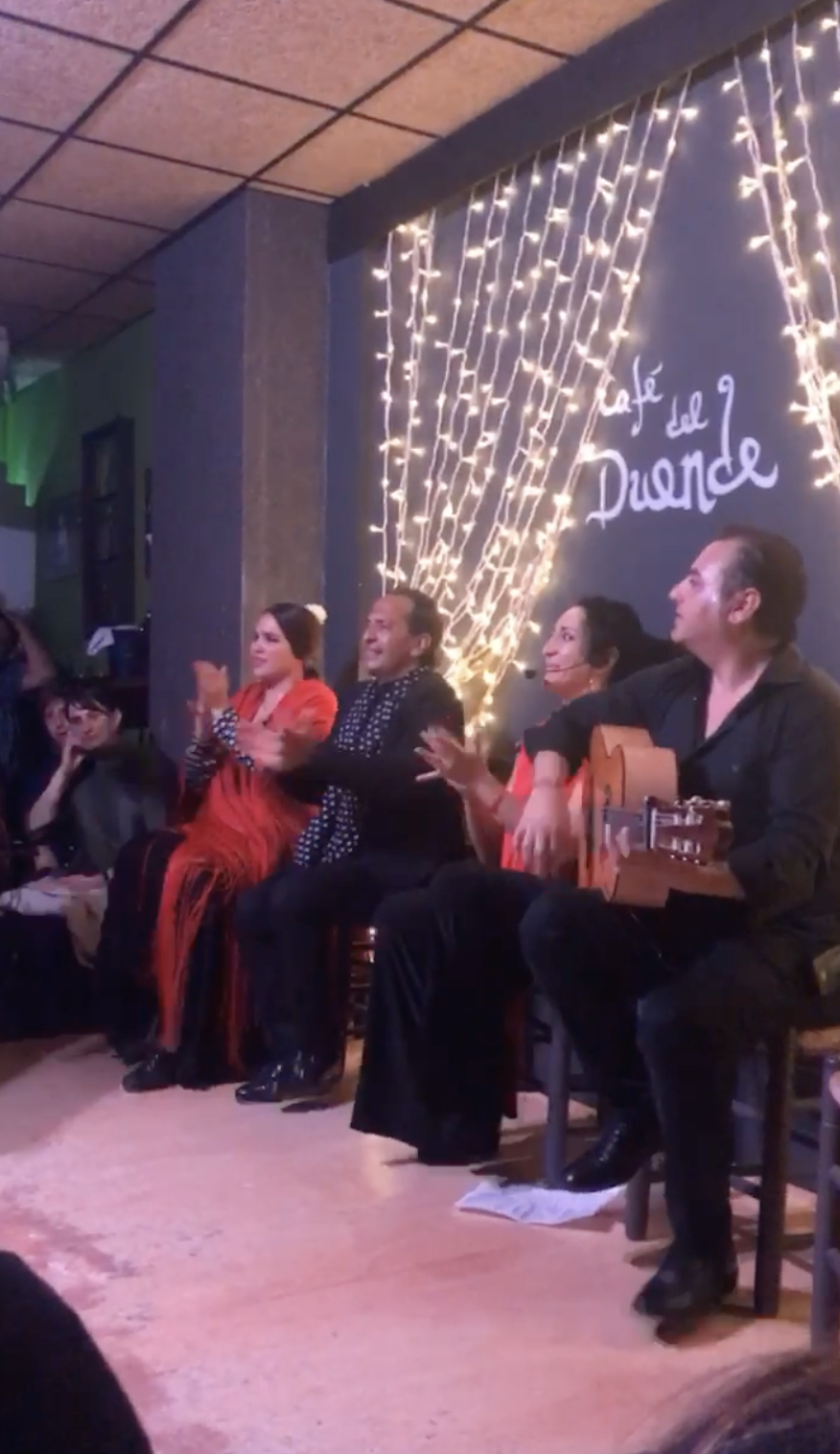
Flamenco is like a roller coaster ride; it starts small, but with each clap the tension and emotion of every move builds to a spectacular explosion of movement. The intensity of flamenco is something that I never even thought possible in dancing; for flamenco, dancing is filled with anger, love, and beauty. The dance rises and falls with the music, and the feelings that the dancers are trying to portray. The dancers are fierce, with stone cold expressions, one dancer constantly staring the other down as if they will suddenly draw swords.
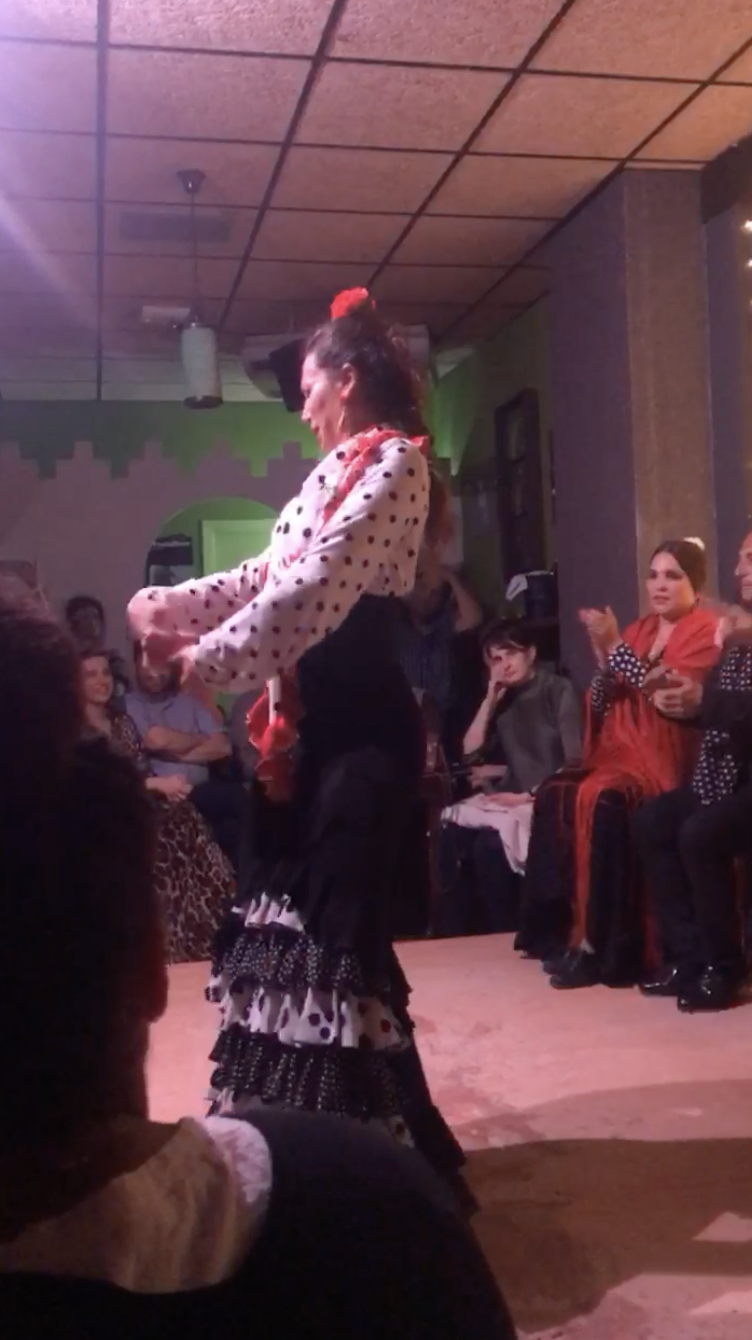
The dancers were very serious, but at the same time they were fun and lively, allowing their playful spirits to travel into the crowd. The small wooden stage sunk into the crowd of people, up close and personal in a way that truly completed the experience. People were crowded around, hoping to catch a glimpse of the fantastic flamenco, literally immersed in the rhythm of the show. The small scuffed up stage was just enough the lift the dancers onto an ethereal level, as their bright costumes twisted in the spotlights.
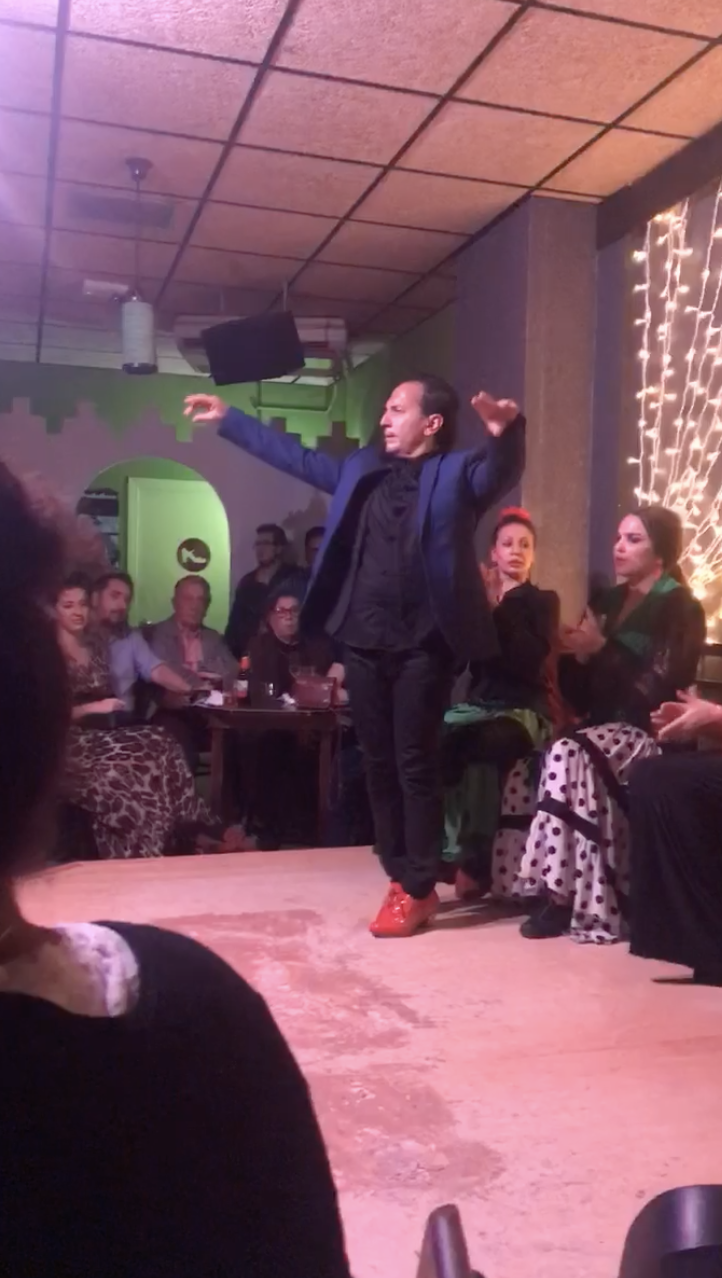
Something that really struck me was the supportive nature of the dance, with the other dancers continuously shouting «¡olé!» to encourage the others on the stage. Not only was it supportive to the dancer, but also encouraged the audience to take part of the show and the culture.
I was really taken aback by the physical nature of the dance. By the end of the show, the dancers were sweating profusely, after their long performance. The dancers threw themselves into the dances, showing the viewers that this is not simply a performance, but rather a way of life.
When I think about the traditions that we have in the United States, I do not see the same strong influence of culture on dance. In the U.S. dance can be a part of the culture, simply making up a piece of a cultural puzzle; however, flamenco in Spain seems like something much more than a piece of the culture; it is the culture. Flamenco defines the culture that it represents, allowing the dancers to take ownership over then culture completely. Flamenco seems to be the light that guides the culture of Southern Spain; instead of allowing the culture to define the dance, the dance helps to define the culture. All the influences of the different regions are able to come together and make something strong, beautiful, and a little scary.

 Serena´s Travel Blog